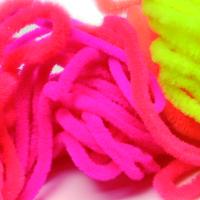
Indian Crow (Substitute): Vivid red accents are an important part of many traditional salmon-fly dressings, yet they need to be placed sparingly to keep the final wing balanced. Indian Crow substitute gives tyers a practical alternative for recreating these small decorative details.
Veniard Indian Crow (Substitute) for Fly Tying
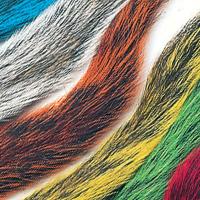
: Veniard Indian Crow substitute supplies red feather material for the cheek and other accent positions on classic salmon flies. Use small, matched sections close to the head or tail so the coloured detail complements the main wing rather than overwhelming it. At
troutcatchers, for complementary Toucan-style salmon-fly accents, see
Toucan (Substitute).
Indian Crow (Substitute) Key Features and Benefits
- Red substitute feather material supports classic salmon-fly accent work.
- Small sections give an eye-catching contrast alongside darker hackles and wing fibres.
- Useful for matching decorative cheek positions on paired sides of a fly.
Top Tips for Tying with Indian Crow (Substitute)
- Prepare two similarly sized red feather sections before final wing assembly.
- Set the main wing first, then position the red cheeks symmetrically near the head.
- Keep the tying thread turns light so the accent remains distinct.
Fly Patterns and Uses for Indian Crow (Substitute)
- Classic salmon-fly cheek: Matched red accents reproduce the Indian Crow-style detail of traditional dressings.
- Jock Scott-inspired pattern: A small red feature adds colour contrast without obscuring other materials.
- Fully dressed display salmon fly: Fine cheek placement improves the symmetry of a complex wing.
- Traditional salmon wet variation: A small red feather throat gives a controlled bright point beneath a dark wing.
Indian Crow (Substitute) Frequently Asked Questions
Is this authentic Indian Crow plumage?
No. This is a substitute supplied for Indian Crow-style red feather detailing.
Where is the material usually positioned?
Most often as a small cheek beside a larger salmon-fly wing, though accent placement depends on the dressing.
How can I make the cheeks match?
Measure and prepare both sides together, then attach them with the same length and angle.
Which complementary fly-tying materials work with Indian Crow (Substitute)?
Compare Toucan (Substitute) for Toucan-style accents and Ibis (Substitute) for Ibis-style red turkey coquille.